
Reader-supported: when you buy through our links we may earn a commission, at no extra cost to you. As an Amazon Associate we earn from qualifying purchases. Learn more
A standing desk lets you switch between sitting and standing during the day. This page collects our standing desk guides. Our first standing desk reviews are on the way.
Quick picks by situation
Not sure where to start? Pick the line that matches your space and setup, then compare options on Amazon.
- Small room or apartment: a compact electric desk around 40 to 48 inches wide. See compact standing desks
- Want to try standing first: a desk converter that sits on your current desk. See desk converters
- Corner or a lot of gear: an L-shaped electric desk. See L-shaped standing desks
- Two monitors or a heavy setup: a wider desk with a dual motor. See dual-motor desks
What to check before you buy
- Height range. Measure your elbow height while sitting and while standing, with the shoes you wear at home. The desk should reach both comfortably.
- Desktop size. Leave room for your screens, keyboard and mouse, and enough depth to keep the monitor about an arm’s length away.
- Single or dual motor. A dual motor usually moves more smoothly, lifts more weight and feels steadier. It matters most for wide desks and heavy setups.
- Stability. Some wobble at full standing height is common on cheaper frames. Look for a sturdy crossbar and read what owners say about wobble.
- Weight capacity. Add up your monitors, monitor arms, computer and accessories, and keep a margin.
- Memory presets. One-touch sit and stand heights make it much easier to actually switch during the day.
- Cable management. A tray or clips keep cables from pulling when the desk moves.
How to use a standing desk well
A standing desk works best when you change position regularly instead of standing all day. Keep the screen at eye level, keep your elbows close to 90 degrees at the keyboard, and consider a mat if you stand on a hard floor.
- Standing desk vs sitting desk: which is better?
- Standing desks for small spaces
- Anti-fatigue mats for standing desks
- Monitor arms for a cleaner desk
- How to set up an ergonomic home office
Standing desk guides
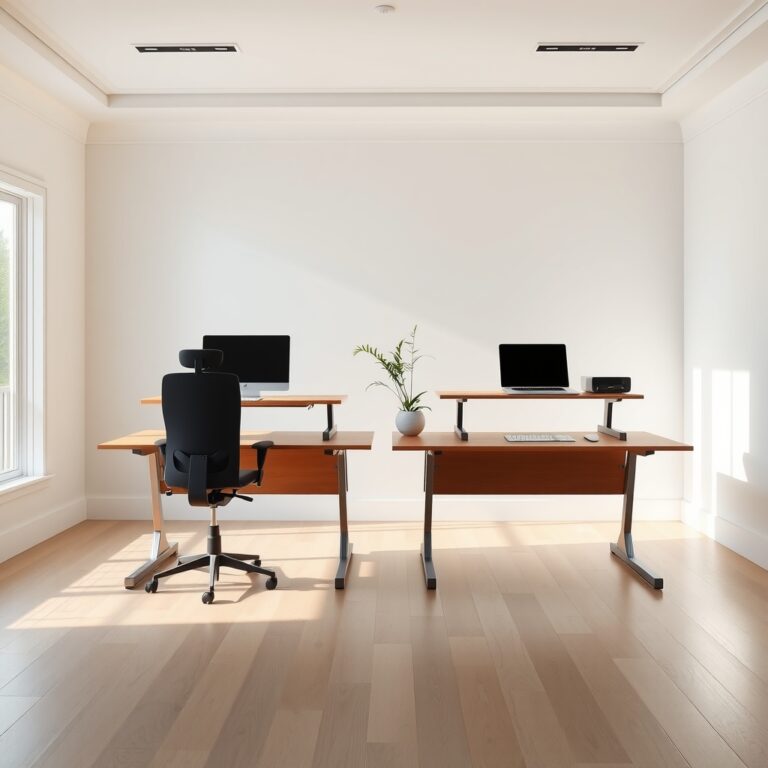 GuideStanding Desk Converter vs Standing Desk: Which Is Better?Cost, space, stability and who each option suits best.
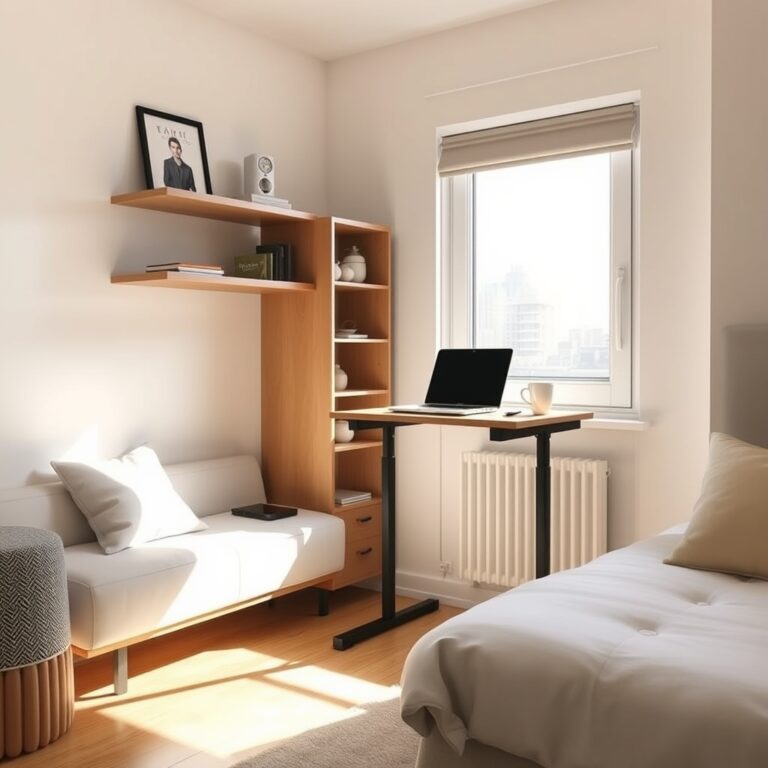 GuideStanding Desk for Small Spaces: Best Options & TipsCompact desks, converters and layout ideas for a small room or corner.
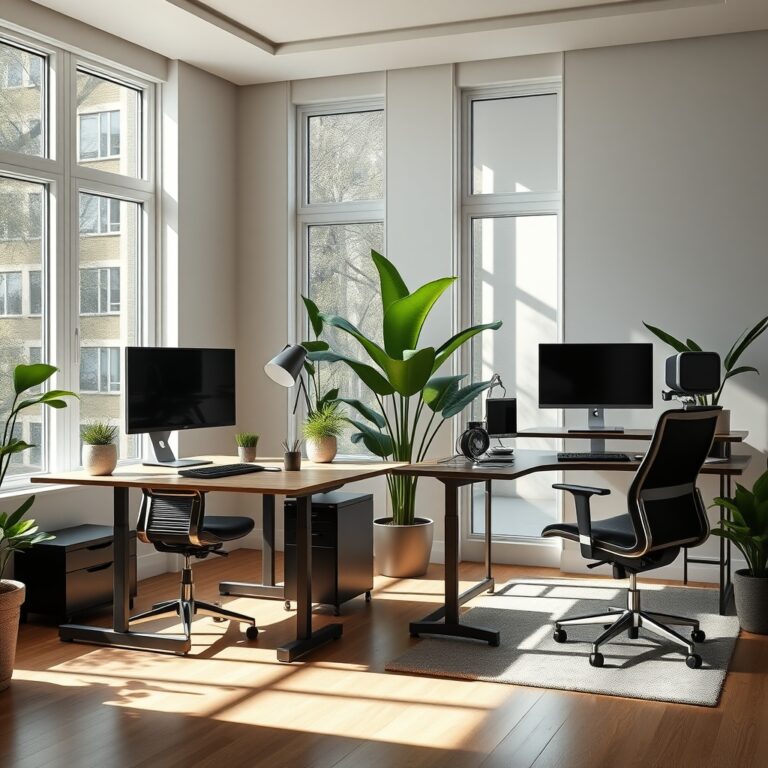 GuideStanding Desk vs Sitting Desk: Which Is Better?Health, comfort and cost compared, plus how to alternate during the day.
 GuideAnti-Fatigue Mats for Standing Desks: What Actually HelpsWhy a mat helps when you stand, what thickness to pick and how to use it.
What to look for in a standing desk
- Electric or manual: electric desks change height at the press of a button; crank desks cost less but are slower to adjust.
- Single or dual motor: dual-motor frames usually lift faster, carry more weight and stay steadier.
- Height range: when standing, your elbows should be at about 90° with the desktop. Taller and shorter users should check the minimum and maximum height.
- Desktop size: measure your space and your monitors before choosing the width and depth.
- Stability: wobble at full height is the most common complaint. Look at the frame design and buyer feedback about wobble.
- Desk converters: if you want to keep your current desk, a converter that sits on top is a cheaper way to try standing.
Tip: do not stand all day. Alternate between sitting and standing, and an anti-fatigue mat makes standing more comfortable.
Looking for a chair to go with your desk? See our office chair reviews.
Some links on this site are affiliate links. See our Affiliate Disclosure.